 PsyGames
Games and exercises
13 sections of the PsyGames home screen and what is inside each. Every card has its own level ladder.
Memory
Memory Span
Digits or space, forward or backward · Training: short-term memory
8 games Digit SpanRepeat sequence forward or backward
 PositionsRemember WHERE it lit: a whole pattern, a chain of blocks, a chain in reverse
 Listening SpanHear the words — repeat the order
 Reading Span: MemoryJudge each sentence’s meaning and remember its last word
 N-back: Working memoryDoes flash position match one from N steps back?
 Picture PairsReveal every matching pair
 OSpan: Math+MemorySolve equations, remember letters
 Mnemonics: SequenceWords and numbers in order
Words
Vocabulary and pulling a word out of memory · Training: vocabulary
7 games Vocab SRSLearn words with spaced repetition
 Word SortWhich category does the word belong to?
 ClozeWhich word is missing?
 Word or Not?Real word — or a fake?
 AnagramsMake words from shuffled letters — four modes
 Phonemic Fluency (COWAT)Name max words on a letter in 60s
 Story Recall: detail memoryRead a story → recall now and after 90s
Mnemonics
Tie the new to what you already know · Training: memorization
4 games Memory PalacePlace items along a route and recall them forward and in reverse
 Faces & NamesLink a face to a name and a fact
 Word Pairs: MemoryMemorize word pairs
 Read the emotionGuess what the person feels
Languages
Memory for a word and memory for how it sounds · Training: vocabulary
2 games WordsVocabulary and pulling a word out of memory
 HearingThe task is heard: tell apart, repeat, name the tone
Chess
Board, squares and pieces: hold the position in your head and recognise the pattern · Training: visual memory
8 games Scholar’s mateA memorised pattern against the clock: what is measured is not whether you can, but how fast you see it. It starts with the scholar’s mate, then neighbouring ones arrive — queen with a knight, bishop mate, smothered mate, fool’s mate. Time per position drops from 20 seconds to 4.
 Board in MindBoard visualization trainer: squares, knight, memory
 Find the MoveA position from a real game: find the move that wins — a mate, a piece or a decisive blow. Twelve tactical motifs, from a hanging piece to mate in two.
 Chess SolitaireEvery move is a capture, and any piece can take any other. Leave a single piece on the board without running into a dead end. 24 steps: from three pieces to ten, from easy boards to tricky ones.
 Knights & QueensTwo classic puzzles on one board. Eight Queens: place the queens so that none attacks another. Knight’s Tour: lead the knight over every square, each exactly once. Each mode has its own 24-step ladder: from small boards up to 8×8 with holes, obstacles and a single solution.
 SignpostsLink the numbers in order, each step along an arrow. Drag from one cell to the next.
 Solitaire PegsJump a peg over its neighbour until a single peg is left. Drag a peg over its neighbour into the empty hole.
 InertiaSlide with the arrows until you hit something: gather the gems, dodge the mines. Move with the arrows, diagonals too.
Attention
Hearing
The task is heard: tell apart, repeat, name the tone · Training: listening
5 games Phonemes: Minimal PairsHear the difference: ship or sheep?
 Chinese TonesHear a syllable, name its tone
 Echo: PseudowordsHear a made-up word — pick its spelling
 DictationA phrase is read out — you type it in full
 Rhythm & PitchEcho rhythms and remember pitch sequences — by ear, no microphone
Visual Search
Find the one among the many · Training: visual search
11 games Visual SearchFind all the target shapes among similar ones
 Find DifferencesSpot what differs between two scenes
 MahjongRemove matching free tiles
 Schulte: AttentionFind numbers from 1 to N
 Object TrackerTrack marked objects in a moving group and identify them after motion stops
 SDMT: Symbol→DigitEncode symbols by lookup table
 SET: TriplesFind a triple by 4 attributes
 Proofread: FocusFind specific letters
 Who Is Hidden?One of the characters is hiding. Ask about features — “Hat?”, “Glasses?” — and those who do not match fade out. When you are sure, pick a character and press “That’s the one!”. The fewer questions, the better.
 Map ColouringColour the regions so that neighbours differ. Drag from a coloured region to an empty one to carry the colour; the second action leaves a pencil mark
 DominoesRebuild how a full set of dominoes lies on the grid. Tap the line between two numbers to join them; the second action marks that no domino is there
Logic & Decisions
Sudoku: three boards
Classic, samurai and fractal · Training: logic
17 games SudokuDigits with no repeats in each row, column and box (6×6 and 9×9)
 SamuraiFive overlapping 9×9 grids sharing corner blocks; standard sudoku in each.
 Fractal SudokuBehind every cell of the top grid hides a whole sudoku
 TowersEdge clues: how many buildings you can see
 FutoshikiSigns between cells, chains of comparisons
 KillerCage sums in the corners, no repeats inside a cage
 FreeClassic, no variants: pick size and difficulty
 Sudoku for Little OnesAnimals instead of digits
 CatsPlace one cat in every row, every column and every colour. Cats may not touch — not even diagonally.
 Odd or EvenEqual black and white cells, never three of a kind in a row
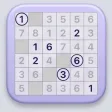 Extra NumbersThe numbers are already there: cross out repeats without splitting the grid. Tap a cell to cross it out; the second action circles one to keep
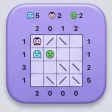 UndeadGhosts, vampires and zombies to match the counts in the mirrors. Tap a cell, then a monster below; the second action leaves a pencil mark
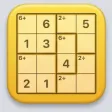 Arithmetic CagesIn each cage, the arithmetic must equal the number in its corner. Tap a cell, then a digit below; the second action leaves a pencil mark
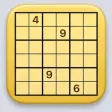 Tatham’s SudokuDigits 1–9 once per row, column and block. Tap a cell, then a digit below; the second action leaves a pencil mark
 Tatham’s TowersA number outside says how many towers are visible from there. Tap a cell, then a digit below; the second action leaves a pencil mark
 Tatham’s UnequalGreater-than signs between cells fix the order. Tap a cell, then a digit below; the second action leaves a pencil mark
 Filling RegionsEach cell holds the size of its own connected region. Tap a cell, then a digit below
Sorting
Fill containers where space runs out · Training: planning + visual memory
10 games Goods SortGroup three identical goods on a shelf
 Test TubesPour the colours until each tube holds just one
 Ball SortSort balls into tubes: one colour per tube
 Nut SortSort nuts onto bolts: one colour per bolt
 Cake SortGather a circle of six matching slices
 PizzaGather a circle of six matching slices
 Tower of HanoiMove all discs to the right peg
 Tower of LondonRearrange balls in minimum moves
 FloodFlood the whole board with a single colour inside the move limit. Tap a square of the colour you want.
 Same GameClear groups of one colour: the bigger the group, the bigger the score. Tap a group, then tap again to clear it.
Space
Turn it in your head, push it through, plot a path · Training: spatial reasoning
24 games Mental RotationFind the rotated copy of a shape
 Number TwistRotate a 2×2 block and put the numbers in order
 Pipe NetworkRotate the pipes so water reaches every end
 KlotskiDrag a block into the free space — get the main block out
 SokobanWalk with the arrows and push barrels onto the marks. A cornered barrel is stuck for good
 Dots ConnectConnect matching dots with non-crossing paths and fill the whole grid
 One LineDraw one continuous line across every edge without using any edge twice
 Trail Making1→A→2→B→3 — attention switching
 NavigatorRemember routes, turn sequences, and the direction back to the start
 GalaxiesCut the grid into regions, each symmetric about its one dot. Tap a line for a wall; a correct region changes colour
 Closed LoopBuild one closed loop guided by the numbers. Tap between two dots to draw a line.
 Pearl LoopA closed loop: white circles need a straight, black ones a turn. Tap between cells to draw a line.
 SlashesDraw a diagonal in every cell and close no loop
 BridgesJoin the islands: the number counts bridges, a double counts two. Drag island to island. Bridges never cross; all must connect.
 Train TracksComplete the track edge to edge, matching row and column counts. Drag square to square: the path sets the shape, nothing needs rotating.
 UntangleDrag a node with your finger and pull them apart until no two lines cross
- PipesTap a piece to turn it. Switch on “Turn back” to turn it the other way. Join the whole network
 Sliding PipesTap an arrow at the edge and the whole row slides around. Pieces never turn, they only travel
- TwiddleTap inside a square of cells and it turns as one block. Put the numbers back in order
 SixteenTap an arrow at the edge: that row or column wraps around. Put the numbers in order
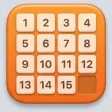 FifteenTap a tile next to the gap, or use the arrows — restore the order
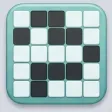 FlipTap cells: each tap flips it and its neighbours. Turn the whole board off
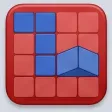 Rolling CubeSteer with the arrows: the solid rolls over an edge and picks up markers with its faces
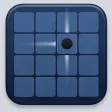 Black BoxFind the hidden balls from where each beam leaves the box
Speed & Self-Control
Attention Conflict
Suppress automatic conflicting response · Training: self-control
8 games StroopColour argues with meaning: ink vs word, ink vs emotion
 ArrowsOne arrow, two buttons: flankers, position, number of choices or a cue
 Long streamA stream with no breaks: hold a rare target, hold a rule that keeps changing
 Targets: ReactionReact to colored objects
 WCST: RulesFind the hidden sorting rule
 Stop and holdDon't press the forbidden one, and cancel a move already started
 Posner Cuing: AttentionReact to target; cue may mislead
 DecisionsNobody states the rule — you infer it from wins and losses
Counting
Numbers in the head: counting, estimating, speed · Training: mental math
17 games Counter: MathMake sums X+Y=Z
 Math SliderEstimate the result and place a marker on the number line
 Number RunSteer a number down the road and decide on the move what to pick up: blue adds, red subtracts.
 Mental Math SprintSolve as many problems as possible in time
 Number Bonds: MathFind numbers that sum to target
 Patterns: ReasoningContinue the number sequence
 Quick CountHow many dots — no counting
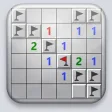 MinesweeperThe numbers say how many mines are adjacent; the board is solvable without guessing. Tap to open a cell; the second action flags a mine
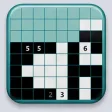 MosaicA number counts the black cells in the 3×3 square around it, itself included. Tap for black, “Empty” for white; it counts once all are decided
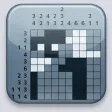 NonogramRow and column numbers are the lengths of black runs, in order. Tap for black, “Cross” for white; it counts once every cell is decided
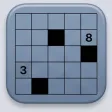 Line of SightA number says how many cells are visible from it along its row and column. Tap to black out a cell; the second action puts a dot for “empty”
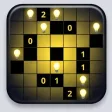 Light UpLight the whole grid with lamps. Tap to place a lamp; the second action marks a cell as “no lamp”
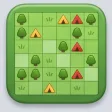 Tents by the TreesPut a tent by each tree, matching the counts on the edges. Tap for a tent; the second action marks grass
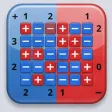 MagnetsEdge numbers: top and left count the “+” in that line, bottom and right the “−”. Tap for a magnet; “Empty” lays blank dominoes — they count too
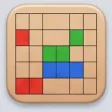 RectanglesCut the grid into rectangles; the number inside is its area. Drag from corner to corner to draw a rectangle — a single tap takes one cell
 PalisadeCut the grid into regions of one size; a number says how many of the cell's sides are borders, the board edge included. Tap a line for a border
 Crack the CodeDeduce the hidden colour code from hit-and-place clues
Recovery
Relaxation
Breathing, eyes, a pause — a short rest for the mind · Restoring: nervous system
4 games BreathingCalm in a few minutes
 Eyes & breathingPlus face, posture, relaxation and mobility — a short body pause with no scoring
 Eye GymnasticsWarm up and unstrain your eyes from the screen
 NightCan’t sleep — unhurried puzzles, then breathing